Choosing a Solar Dehydrator for Fruits Vegetables Spices and Herbs
Wiki Article
Introduction
Selecting a drying machine for agricultural products is not simply a matter of comparing machine sizes. The product, processing quantity, moisture content, required final condition and operating environment all influence the suitability of a particular dryer.
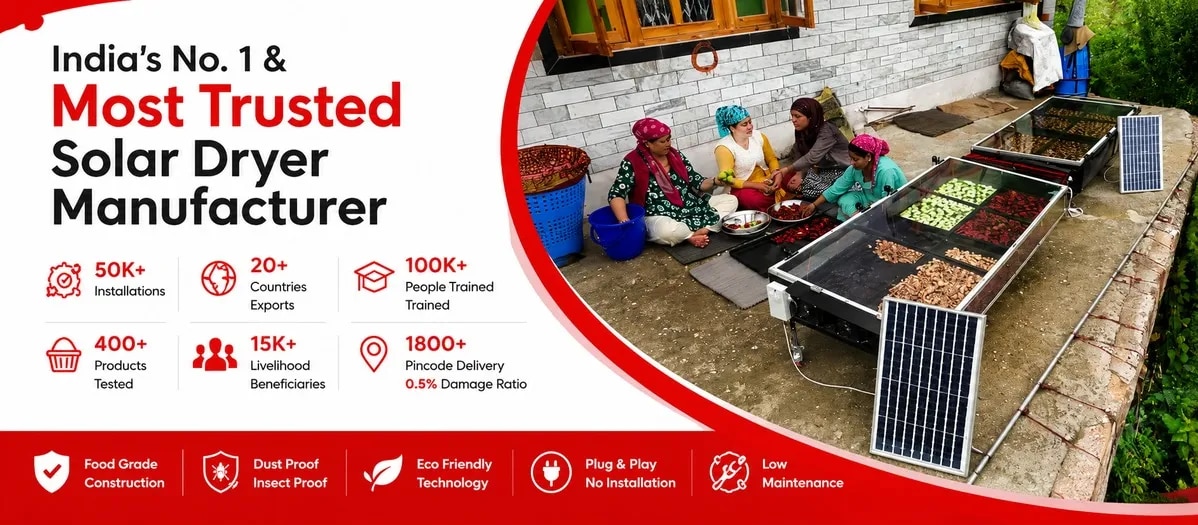
Solar drying machines have become an option for businesses that want to use solar thermal energy for appropriate agricultural and food-processing applications. Rudra Solar Energy offers a range of systems designed around different commodities and processing scales.
The company's product range includes cabinet solar dryers, fruit dryers, vegetable dryers, spice dryers, herb dryers, grain dryers, pulse dryers, seed dryers, oilseed dryers, flower dryers and commercial tunnel systems.
Start With the Product
Before choosing a solar drying machine, the business should identify exactly what it wants to dry. This sounds obvious, but different commodities can require substantially different processing approaches.Fruits, vegetables, spices, herbs, grains and pulses can have different moisture characteristics and preparation requirements.
Preparation Influences Drying
A product may need to be washed, sliced, chopped, peeled, graded or otherwise prepared before loading. Slice thickness and surface area can influence how quickly moisture leaves the material.Rudra Solar Energy notes that commodity, preparation, slice thickness, loading and other variables can affect drying performance.
Understanding Machine Capacity
Capacity is one of the most visible specifications when comparing solar dryers. Rudra Solar Energy states that its cabinet dryer range extends from 5 kg per batch to 500 kg per batch. :contentReference[oaicite:17]index=17However, nominal batch capacity should be considered alongside the actual product and process.
Small Batch Requirements
A small entrepreneur or SHG may need a compact machine for product trials or limited production.Medium Scale Processing
A food-processing business with regular production may need a medium-capacity cabinet system.Large Commercial Requirements
An FPO, commercial processor or large agricultural enterprise may require a higher-capacity system or tunnel dryer.The appropriate choice depends on the production plan rather than capacity alone.
Cabinet Solar Dryers
Cabinet dryers provide an enclosed chamber with organised tray loading. Rudra Solar Energy describes its cabinet solar dryer as suitable for farmers, SHGs, FPOs, food entrepreneurs, agricultural processors and institutions. :contentReference[oaicite:18]index=18The enclosed structure helps reduce direct exposure to dust, insects, birds and sudden rain compared with open-sun drying.
Tray Based Operation
Tray loading provides a defined surface for distributing material. Proper spacing and loading can help air move around the product.The operator should follow the recommended loading practices for the specific model and commodity.
Product Specific Solar Dryers
Rudra Solar Energy also lists application-focused machines. For example, its range includes solar fruit dryers, solar vegetable dryers, solar spice dryers and solar herb dryers. :contentReference[oaicite:19]index=19This product-oriented approach can be useful when the business has a primary commodity or specialised processing requirement.
Why Specialisation Can Matter
A spice processor may have different requirements from a fruit processor. An Top Solar Dryer herb processor may need to pay particular attention to the handling of delicate plant material.Product-specific evaluation can therefore provide more useful information than simply selecting a general machine based on size.
Commercial Drying Requirements
Commercial operations often require repeatability. If a business is processing multiple batches every week, the operator needs a consistent procedure.Important factors include:
- Fresh input quantity
- Product preparation
- Loading arrangement
- Airflow
- Solar availability
- Ambient humidity
- Desired final condition
- Cooling and packaging process
Rudra Solar Energy's published information states that actual drying performance can vary with these kinds of conditions.
Site Assessment
The location where the dryer will be installed can affect its practical use. Solar exposure, available area, accessibility and electricity availability may all be relevant.Rudra Solar Energy's location guidance recommends sharing information about the site, product, quantity, season and processing requirements when evaluating a suitable system.
Planning for Expansion
A business should also consider whether its production may increase. Buying a machine that fits today's requirements may be sensible, but future processing plans can influence the choice.Capacity should be evaluated against realistic business expectations rather than speculative production.
Backup Heating
Some solar dryer configurations can include backup options. Rudra Solar Energy lists optional electric or biomass backup for suitable systems. :contentReference[oaicite:22]index=22Backup can be relevant when a business needs greater flexibility during periods of limited sunlight. The actual requirement depends on local conditions and the product.
Conclusion
Choosing a solar drying machine should begin with the Website product and production requirement rather than the machine's headline capacity. Fruits, vegetables, spices, herbs, grains and other products can have different drying characteristics.Rudra Solar Energy provides multiple solar dryer formats and application-specific options, ranging from small cabinet configurations to larger commercial systems.
A good selection process considers product type, fresh quantity, moisture condition, preparation, airflow, installation space, solar availability, electricity and future production needs. When these factors are evaluated together, Solar Dryer a solar dryer can be integrated more effectively into an agricultural or food-processing operation.
 Report this wiki page